
Friday, May 20, 2016
Summary of the Year
Coming into this year I was not very educated on US history, throughout the year I never found a boring spot because everything that we talked about involved our country. In the movie "13 Days," the people at the top of the government had to find a safe alternative to invading Cuba. This related to our theme that we were discussing earlier about how we need to get involved. It showed how when we all get together and discuss solutions, anything is able to overcome. I think this movie was a great way to rap up the year.

Monday, May 9, 2016
Letter to Future Student
Dear Future Student,
I’m writing you this letter in the year 2016, we live in a very modern world that is reliant on technology, but not as modern and technology driven as the world you are going to be living in. We are studying the climate and really narrowing down our studies into individual sections. My section was the history, so I researched things like major climate crisis in America, or the beginning of the push for a cleaner and healthier environment. My research was very interesting to do, and pretty straight forward, I find the history of this topic very interesting because it is currently such a discussed topic among politicians and just the everyday person. Before my research I knew a little about the history of this topic, but now that I have had some time to research this, I feel educated enough to be able to brief people on this topic.
In the first half of the 20th century, there was really no discussion about the topic of how we need to be aware of climate change and what we can do to be an environmentally cleaner society. Industrial areas with factories, machinery, and vehicles were all polluting our earth and beginning to impact the environment in a bad way. Rachel Carson, an American marine biologist and conservationist, published a book titled Silent Spring (1) in 1962. This book is what ignited the environmental awareness movement. She discussed things such as pesticides that were being used on our crops that were harming the consumers. In her book, she used data that had already been released, but but it all together in a way that the public had never seen before. She drew conclusions that nobody had ever thought of, and presented ideas to the public that changed their opinions and views. She was not only an author, but an active participant in the movement. In 1963 she testified before a senate subcommittee on how the pesticides that were being used were not safe. Without Rachel Carson’s drive to educate the public on this topic, the society that I live in could potentially be an environmentally different place.
Once I studied Rachel Carson, and heard about her view on pesticides, I decided to do some research myself. I found a lot of information, but the most interesting thing that I came across was an experiment (2) that took place in San Joaquin Valley, California. A group of mothers agreed to participate in a controlled case study where they were all exposed to the same element that involved a certain pesticide. This took place from 1997-2006, and 569 of the mothers had children with heart defect cases, and 785 had malformed cases. After actually seeing the damage that pesticides could do, I realized why Rachel Carson pushed so hard to educate society about this issue.
The most common type of pollution to our environment that I came across was air pollution. I found this very interesting to read about because a company named TVA (Tennessee Valley Authority) is a company that is in the area that I live in, and was the largest electricity producer in the US after WWI. One of the ways that this company produces energy is with coal fired plants.(3) Electricity producers are coals largest customers, but many of the coal fired electricity plants, are being shut down. The plants that have been closed over the year are 5% of the total coal generating capacity in the US. The area that TVA is in, was an depression era entity that was brought to life by TVA bringing coal generated electricity to this area. TVA began to build many coal fired plants after WWI, and in the 50s started to build even more. TVA first began to stop using coal in 2011 when the federal government said the plants were too environmentally dirty. By 2018 TVA has to shut down 18 of its 59 coal fired plants. TVA now has started to use more natural gas, which is much cleaner for our environment.
One of the reasons that TVA has started having some trouble with their coal fired energy plants, is because of the “Global Warming Pollution Act.” (4) This act was first introduced to senate in the beginning of 2007. The act sets provisions concerning global warming pollution emissions. It says that electricity generating units have to meet an emission standard. The most interesting thing that I found in this act was that it said all models of cars made after 2016, have to meet emission standards. I think that this act was very necessary because it helps make sure that the large companies are keeping their energy producing units as clean and safe as they can be, which is very necessary.
The society that I live in is aware about our changing environment, but doesn’t do as much as I think we can do to keep our world a clean place, but the few people that take action and actually do something about it make a big difference. By the way our country is headed when it comes to this topic, I think that by the time you’re reading this letter, y’all will have much stricter regulations and rules limiting y’all from what you can and cannot do when it involves this topic. I think the reason that you will live in a society like that, is because of the way we act right now, but I’m not sure if enough people are considering the future for us to be able to do anything to make a change.
1. NY Times Magazine, article named "How Silent Spring Ignited the Environmental Movement" by Eliza Griswold, published September 21, 2012.
2. Beyond Pesticides, a "pesticide-induced" disease database," I looked in the birth defects section.
3. Slate.com was a news site that wrote an article on the TVA coal plant issue, article published by Daniel Gross on October 2, 2015.
4. Congress.gov is a government website that talks about the senate issues and acts that are introduced.
1. NY Times Magazine, article named "How Silent Spring Ignited the Environmental Movement" by Eliza Griswold, published September 21, 2012.
2. Beyond Pesticides, a "pesticide-induced" disease database," I looked in the birth defects section.
3. Slate.com was a news site that wrote an article on the TVA coal plant issue, article published by Daniel Gross on October 2, 2015.
4. Congress.gov is a government website that talks about the senate issues and acts that are introduced.
Monday, May 2, 2016
Background of Climate in the US
The first thing that I needed to look at when thinking about climate background was a general timeline of climate change in the US around the mid 1800s was when the first scholars were conducting educated experiments and making assumptions about how the human population can affect the climate. These scientists were men like Charles Fourier and John Tyndall. This website gave me a very good timeline.
The US has started to take heavy action on climate change, implementing the Climate Action Plan in 2015. The US has also done things like say they would not implement the Kyoto Protocol in 2001 because it would cause economic set back in the US. There wasn't very many policies regarding the climate until fairly recently, the US can't risk hurting our economy while trying to be environmentally friendly.
The US has started to take heavy action on climate change, implementing the Climate Action Plan in 2015. The US has also done things like say they would not implement the Kyoto Protocol in 2001 because it would cause economic set back in the US. There wasn't very many policies regarding the climate until fairly recently, the US can't risk hurting our economy while trying to be environmentally friendly.
Thursday, April 28, 2016
Climate Science
The section about climate that I am most interested and would like to study is the Science part, the questions in this section interest me because the science aspect really makes me think. I wonder how the climate really changes, and how all of this stuff that we hear about actually works. This section would be a fun topic for me to research.
Monday, April 25, 2016
Climate
First Five Words: Environment, Snow, Rain, Temperature, Tropical
I thought of these words when I heard the word climate because it made me think of the weather, and when I thought of weather I thought of ways to describe the weather, that is how I came up with these words.
My question: Are our previous generations or us to blame for climate change?
I thought of these words when I heard the word climate because it made me think of the weather, and when I thought of weather I thought of ways to describe the weather, that is how I came up with these words.
My question: Are our previous generations or us to blame for climate change?
Thursday, April 14, 2016
The 1930s
The Depression
- Hoover said it would be over in 60 days, when it lasted for years
- Hoover didn't think the government should offer help to the poverty stricken
- People associated all the success in the 20s as earned, so they did the same with all the failure in the 30s as earned too
- This was invalid, it the Depression was caused by the stock market crash, something that had to do with the extreme imbalance of the extremely wealthy and the lower class
- I would have feared for my life, it seemed like every person's story was life threatening
- During the storm I would be wondering if I would even come out alive
- After the storm I would question if I needed to move my family to a safer, more suitable place to live our lives
- The western third of Kansas, Southeastern Colorado, the Oklahoma Panhandle, the northern two-thirds of the Texas Panhandle, and northeastern New Mexico were affected by the drought
- Improper farming techniques my so many of the settlers loosened up the top soil, and when the wind blew, the soil went with it
- Yes, America was out of balance, America went from the Roaring 20s, to the Great Depression in the matter of a day. The whole country was out of balance
- By 1940 2.5 million people had moved out of the plains
- It was the largest migration in US history
- Californians did not give the people coming into California a warm welcome
- Police were set up at borders telling all the "undesirables" they couldn't come in
- Many of the farmers that tried to farm in California, were put onto big, corporate farms that were unfamiliar to them
- They made very little money, so that way they could buy overpriced groceries and rent a little shack with no water, plumbing, or electricity
Wednesday, April 13, 2016
How Radios Work
- The antenna catches and receives all the info
- Antennas are sometimes called receivers
- A transmitter is a different type of antenna
- Transmitters turn the info into a radio wave so it can travel around the world or even to space and back
- The electrons in the radio waves bounce back and fourth and that causes invisible electromagnetic radiation and that is what causes the radio waves
- Radio waves move at the speed of light
- The waves that travel at the speed of light take our radio program with them
- The first radio antenna was about 60-100 ft tall
- The first antennas were made out of copper
- On radios you have 2 different antennas for the different frequencies on AM radio and FM radio
- AM radio signals have a frequency of about 1000 kHz
- FM radio signals have a frequency of about 100 mHz
Sunday, April 10, 2016
In Class Speech
The 1920s were called the “New Era”
for one reason; it was a time where many new and modern ways of life were
introduced. Some people were against the modernistic movement, and some
accepted it. Religion, the economy, nativism, new technology, and culture were
all incorporated in the New Era modern movement.
In the early 1900s, religion played
an important role in almost every American’s life. When the theory of Darwinism
began to come about many people were skeptic and not very happy about it. In
fact, people were so against it, that when their kids were taught this in
school, they were enraged. Parents got so torn up about this that it led to the
Scopes trial. Scopes was a young teacher who taught Darwinism to his students
even though he was told he could not. This led to a trial that caught
everyone’s attention and showed people that traditional religion, and science,
could co-exist.
Another way the New Era changed our
country, was how it helped shape the youth culture to the way we are today. The
number of schools available increase, which made high
school attendance nearly double, and the number of college students doubled as
well over a 12 year span. Spending more time in schools and colleges allowed young
people to acquire the skills necessary for a specific work field; people began to define themselves more by their social groups as
opposed to family background. Teenagers really branded themselves with a separate title during this time by using slang, an becoming the type of youth that we consider ourselves today.
There was also vast economic change in the 1920s. One of the biggest changes in the economy was that women began to have jobs that weren't just in the house. Still, women were confined to more feminine jobs, such as fashion, social work, education, and nursing. Most women still ended up staying in their house and being the traditional woman figure. Even though women weren't the leaders of companies or anyone's boss, this was still the first time in history that women were seen in the normal workplace.
Another thing that had not been introduced until the 1920s was the fact that people were buying things that were considered "luxury items." These items consisted of refrigerators, cars, radios, vacuum cleaners, cars and more. These things in previous years were considered rare to even see in the upper class homes, now you'd see them in many middle class people houses. The rise in automobile use, drove the construction factories to rise and improve so they could pave more roads and make it possible for everyone with cars to safely travel.
Some groups of people who were against the modern movements took action in harsh ways. The KKK was revived and their targets weren't blacks, they were trying to eliminate Blacks, Catholics, Jews, and anyone else who challenged their traditional values. After 1925 the clan took a harsh decline and not much was done after that.
The 1920s, or the "New Era," was one of the most important time periods in our countries history. It helped shape they way we view modern religion, culture, and our economy. Without the people who pushed this modern movement, our country wouldn't be the way it is today.
Wednesday, April 6, 2016
Book Review
I read Alexa's booklet, hers was titled "Love in the Renaissance," it was about how the lifestyle for African-Americans changed and was molded around some big names in music at that time. The book used the old slang in a way that even though I didn't know what all the words meant originally, I could understand what she meant by the way she used the words. The story was interesting, but at the same time very informational and taught me a lot just through the story. The illustrations were simple, but got the point across and were effective. Overall good book and I enjoyed reading it.
Abbie wrote her book on prohibition. Her cover art was very good, and all of the other illustrations throughout the book really help tie the text together. There wasn't much writing in the book, but I didn't mind it because everything said was very informational.
Abbie wrote her book on prohibition. Her cover art was very good, and all of the other illustrations throughout the book really help tie the text together. There wasn't much writing in the book, but I didn't mind it because everything said was very informational.
My Little Booklet

Friday, March 11, 2016
The Jazz Age (Roaring 20s)
The 1920s were when there was vast change in the united states. Before there was more people who lived in rural areas on farms than there were in cities and towns. The 1920s were the first time more people lived in cities than on farms in rural areas. The nation's wealth went up more than 2x between 1920 and 1929. Many Americans were put into the unfamiliar "consumer society." That is where the buying and selling of goods is the most important social and economic activity. For many people, this new urban life caused more conflict than good, but for some young people, they lived the "roaring" lifestyle.
 The picture is what NYC looked like int he 1920s.


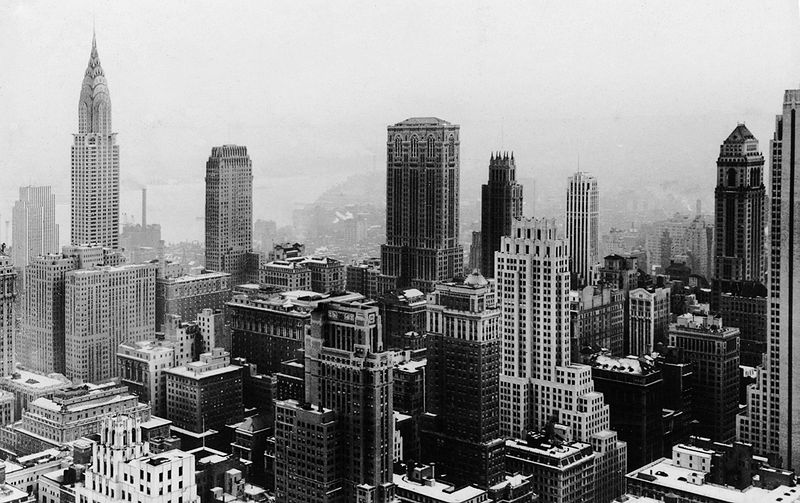 The picture is what NYC looked like int he 1920s.
The typical woman in the 1920s is portrayed as a "flapper" woman who drank, smoked, and was out all night. In reality, the 1920s was a very important time for the typical American woman, the 19th amendment was passed and women could finally vote. Women were working well payed white collar jobs, and birth control made it to where women weren't having as many children as they were before.
Cars also gave young people the ability to drive along where they pleased. Young people also loved to dance. Jazz bands emerged that people danced to, and radio stations played music along to people all along the country.
Monday, February 22, 2016
All the topics combined thesis
With many of the progressive reforms, the government stepped in the "improve" some of the progressive movements that innovators in society had started, or to "protect" the people from their selves and some of the new technology and ideas that were coming around, but in reality, some of the problems that they thought they were solving just ended up creating more problems in the long run.
Sunday, February 21, 2016
Progressive Questions
The crusading journalists who began to
direct public attention toward social, economic, and political injustices
became known as the? a) Crusaders b) Muckrakers c) Progressives
Progressive reforms were
supported by mainly the? a) Lower class b) Immigrants c) The Middle Class d) All Social Classes
In 1901, one of the first professions
to respond to the progressive movement was the? a) Lawyers b) Medicine c)
Education d) Independent Business
Who felt excluded from emerging professions in the progressive era? a) Women b) Working class men c) The unemployed d) Immigrants
Who felt excluded from emerging professions in the progressive era? a) Women b) Working class men c) The unemployed d) Immigrants
Friday, February 19, 2016
Progressivism Topics Thesis and Conclusion
I was working with Brooks, Trey, and Myself. Our topics were prohibition, the black socks scandal, and patent laws.
Thesis:
Thesis:
With our three topics, prohibition, patents, and the 1919 world series, there was a clear relation between them. The one thing that connected them all was the government coming in and being a referee and to the people. The government was a trying to control civilians when it came to their consumption of alcohol, control them from stealing other people's ideas, and intervene when it came to professional sports and how there should be rules on and off the field.
Conclusion:
The government stepped in to act as a referee in order to stop the consumption of alcohol and to keep ideas from being stolen from one one another, and to make a higher level of rules in professional sports.
Wednesday, February 17, 2016
How Prohibition is Related to Progressivism
I used this newspaper for my blog post, it was written by the Boston Evening Post on Feb 6, 1738
Prohibition lasted from 1920-1933, even though it was only in those few years, there was a push discouraging the use of alcoholic beverages since the 1830s and even before. Herbert Hoover said that prohibition was a "noble experiment," but after a while people began to act up, there became no way to actually force prohibition upon people because there were bootleggers who were becoming more and more powerful since they were supplying all of the people with alcohol. There were some very authoritative bootleggers, like Arnold Rothstein. Arnold Rothstein was the leader of the Jewish underworld in New York, and was the man who rigged the 1919 world series. Other big names in the bootlegging business are men like Al Capone and Dutch Schultz. By the 1930s there was no point for the 18th amendment to be upheld since the bootleggers were already supplying non taxed alcohol to everyone, so the 18th amendment was repealed.
Before prohibition, the use of alcohol was heavily associated with those of the lower class and the ill. Prohibition has many of the same attributes as progressive reforms. It was supported by the middle class mostly, it was meant to "improve and better" society, and it was meant to control peoples interests with large and powerful politicians. Prohibition was a progressive reform, but eventually was repealed by the same people who were fighting for prohibition in the first place.
 This is Arnold Rothstein, one of the biggest bootleggers during prohibition.
 This is what bootlegged alcohol looked like.
  A newspaper when prohibition was finally lifted.
Prohibition lasted from 1920-1933, even though it was only in those few years, there was a push discouraging the use of alcoholic beverages since the 1830s and even before. Herbert Hoover said that prohibition was a "noble experiment," but after a while people began to act up, there became no way to actually force prohibition upon people because there were bootleggers who were becoming more and more powerful since they were supplying all of the people with alcohol. There were some very authoritative bootleggers, like Arnold Rothstein. Arnold Rothstein was the leader of the Jewish underworld in New York, and was the man who rigged the 1919 world series. Other big names in the bootlegging business are men like Al Capone and Dutch Schultz. By the 1930s there was no point for the 18th amendment to be upheld since the bootleggers were already supplying non taxed alcohol to everyone, so the 18th amendment was repealed.
Before prohibition, the use of alcohol was heavily associated with those of the lower class and the ill. Prohibition has many of the same attributes as progressive reforms. It was supported by the middle class mostly, it was meant to "improve and better" society, and it was meant to control peoples interests with large and powerful politicians. Prohibition was a progressive reform, but eventually was repealed by the same people who were fighting for prohibition in the first place.
This is Arnold Rothstein, one of the biggest bootleggers during prohibition. This is what bootlegged alcohol looked like. A newspaper when prohibition was finally lifted. Wednesday, February 10, 2016
Self Reflect
During the beginning of the 3rd quarter I was very active with my reading and homework questions. I noticed a difference in class discussions and how I was doing on our work. When I spent just an extra few minutes reading the homework and doing it just a little more carefully, it helped me get a better understanding of our content. I really liked the Eddie Aikau 30 for 30 movie that we watched, it was really interesting on its own, but it was also cool that it tied in perfectly to what we were learning, it helped me look at what we were discussing in class from a different angle. In the future I want to make sure that I stay on top of my homework assignments and make sure that I keep reading the book carefully for a few extra minutes so I can keep my good momentum going forward.
Tuesday, February 2, 2016
Progress
How would you define “progress”? Progress is moving forward, or advancing in something.
What period in time is referred to as the Progressive Era? Why? The progress era was fro 1890-1920, the main objective in the progress era was eliminating corruption in the government.
What types of issues and actions, and achievements are associated with the Progressive Era? Many progressives supported prohibition, some activists got together to reform local government, public education, medicine, finance, insurance, industry, railroads, churches, and more areas.
Progressives had lots of goals. Analyze the list you've made and determine: What do progressive reforms seem to have in common? Most progressive goals had to do with improving something for the public, something that the whole public would us and find useful.
Evaluate the major goals of Progressives and sort them into these 4 categories: such as best to worst.
What period in time is referred to as the Progressive Era? Why? The progress era was fro 1890-1920, the main objective in the progress era was eliminating corruption in the government.
What types of issues and actions, and achievements are associated with the Progressive Era? Many progressives supported prohibition, some activists got together to reform local government, public education, medicine, finance, insurance, industry, railroads, churches, and more areas.
Progressives had lots of goals. Analyze the list you've made and determine: What do progressive reforms seem to have in common? Most progressive goals had to do with improving something for the public, something that the whole public would us and find useful.
Evaluate the major goals of Progressives and sort them into these 4 categories: such as best to worst.
- Essential goals worth striving for/ Necessary changes Reducing the impact of the harsh conditions brought about by industrialization
- Good Goals – not strictly necessary but could really improve life Helping the poor through community centers, social services and churches
- Strange Goal
YMCA: libraries, recreations pools, handball courts - Not a good idea Prohibition- banning alcoholic beverages
Friday, January 29, 2016
The Future
What predictions about the future were people making 100 years ago? This website shows an article that talks about predictions for the year 2000 from a 19th century German Chocolate company. They predicted police with x-rays, flying machines (hang gliding kind of), movable houses, undersea ships (submarines), being able to walk on water, a city with a roof, theaters, moving sidewalks, and machines that can make the weather good.
What predictions about the future were people making 50 years ago? This website shows prediction about the 21st century from 50 years ago. One of the predictions was that our space exploration program would be much more expansive than it actually is now. There were ideas that we would have "moon colonies" by now as well and we would be able to purchase lunar terrain. Another interesting thing I read was how they though we would have "glow panels" on our walls where we could basically just touch a big screen on our wall and change the color/design on of our walls. This website also talks about President Truman's prediction for the future, he didn't predict very materialistic things, instead he said that we would have obtained world peace by now.
Determine if the list is a “wish list” – as in, these are the things one might hope for in the future, or more a warning. I think that some of the predictions were things that people would have liked to happen, but not necessarily expected to happen, things such as being able to walk on water. But some of the predictions were very understandable predictions and thoughts, like the growth of our space exploration program, or world peace.
Which predictions seem to have come true? Which turned out to be bizarre, off-track, or still out of reach? Some of the predictions that came true were things like the underwater ships, flying machines, theaters, and moving sidewalks. Some of the more wild predictions were things like being able to walk on water, or being able to purchase lunar terrain. I think one of the bizarre but reasonable and understandable predictions at the same time was that we would have world peace by now, its understandable, but at the same time it seems like we will never obtain peace throughout the world.
Can you identify any trends or patterns in these predictions? What concerns or achievements do they seem focused on? For example, do people in general seem to be anticipating a better world?
What predictions about the future were people making 50 years ago? This website shows prediction about the 21st century from 50 years ago. One of the predictions was that our space exploration program would be much more expansive than it actually is now. There were ideas that we would have "moon colonies" by now as well and we would be able to purchase lunar terrain. Another interesting thing I read was how they though we would have "glow panels" on our walls where we could basically just touch a big screen on our wall and change the color/design on of our walls. This website also talks about President Truman's prediction for the future, he didn't predict very materialistic things, instead he said that we would have obtained world peace by now.
Determine if the list is a “wish list” – as in, these are the things one might hope for in the future, or more a warning. I think that some of the predictions were things that people would have liked to happen, but not necessarily expected to happen, things such as being able to walk on water. But some of the predictions were very understandable predictions and thoughts, like the growth of our space exploration program, or world peace.
Which predictions seem to have come true? Which turned out to be bizarre, off-track, or still out of reach? Some of the predictions that came true were things like the underwater ships, flying machines, theaters, and moving sidewalks. Some of the more wild predictions were things like being able to walk on water, or being able to purchase lunar terrain. I think one of the bizarre but reasonable and understandable predictions at the same time was that we would have world peace by now, its understandable, but at the same time it seems like we will never obtain peace throughout the world.
Can you identify any trends or patterns in these predictions? What concerns or achievements do they seem focused on? For example, do people in general seem to be anticipating a better world?
Wednesday, January 20, 2016
How do you analyze a political cartoon?
I used this website to show me how to analyze political cartoons. The steps were:
1. Recognize exaggeration
2. Understand symbolism
3. Understand labeling
4. Understand analogy
5. Recognize irony
I already knew that political cartoons exaggerate a lot to get their point across, and they use symbolism and irony together to get their point across even better. I already knew these steps, but it is still hard to do these things sometimes.
Going forward, I think the guide above is the best way to analyze political cartoons because it is simple, but gets the all the points across very well.
 This shows how America went in the Filipinos' land and basically just took over their land and country and made them our work-horses.
 This shows the Filipino boy being portrayed as a savage and Uncle Sam not being very happy about the $20,000,000 check that he wrote to acquire the Filipinos' land.
 This cartoon shows Uncle Sam riding on two globes, this shows how during this time, the US was going around the world, trying to claim as much land as they could, thinking the world was theirs.
1. Recognize exaggeration
2. Understand symbolism
3. Understand labeling
4. Understand analogy
5. Recognize irony
I already knew that political cartoons exaggerate a lot to get their point across, and they use symbolism and irony together to get their point across even better. I already knew these steps, but it is still hard to do these things sometimes.
Going forward, I think the guide above is the best way to analyze political cartoons because it is simple, but gets the all the points across very well.
This shows how America went in the Filipinos' land and basically just took over their land and country and made them our work-horses.This shows the Filipino boy being portrayed as a savage and Uncle Sam not being very happy about the $20,000,000 check that he wrote to acquire the Filipinos' land. This cartoon shows Uncle Sam riding on two globes, this shows how during this time, the US was going around the world, trying to claim as much land as they could, thinking the world was theirs.
Friday, January 15, 2016
Documentary
This film was called Hawaiian, the Legend of Eddie Aikau because Eddie was Hawaiian and it was a story about him. The topic of the documentary was Eddie himself, the focus was the Hawaiian identity and Eddie's surfing. The thesis I came up with for this documentary was, "Eddie embodied the original Hawaiian culture/spirit and kept it alive thorough his passion for family, community, and surfing." Since this documentary was made by ESPN, we can assume that it might not be as factual as if it were made by PBS or another company. Although this documentary was very informative and factual, it heavily focused of Eddie's surfing career opposed to focusing on more of the history of the Hawaiians.
6. The blowing up of the Maine would be what I made my documentary about. The topic would be the Maine, the focus would be how it was falsely identified as an attack by the Spanish. The thesis would be, "Even though the Spanish didn't blow up the Maine, the Americans thought they did and were outraged, without this happening the war/conflict with Spain wouldn't have escalated to the levle that it did.
6. The blowing up of the Maine would be what I made my documentary about. The topic would be the Maine, the focus would be how it was falsely identified as an attack by the Spanish. The thesis would be, "Even though the Spanish didn't blow up the Maine, the Americans thought they did and were outraged, without this happening the war/conflict with Spain wouldn't have escalated to the levle that it did.
Thursday, January 7, 2016
Phrenology Research
Today we were sent to the front of the classroom to look at a little porcelain bust of a head. On the head there were different parts of the brain labeled for different emotions. On the bust, the only things that indicated who made it were, "L.N. Fowler, Phrenology," and a few manufacturing details on the bottom of the bust. Once we were done looking, we came back to our table and began to research. Almost everyone either searched something about Phrenology or L.N. Fowler, and most of us got results fast. One of the fastest ways to get results was to do an image search and look until you found the same type of bust that we were looking at and then use the pictures website. We found out that the piece that we were looking at wasn't an original, but was a replica made out of Oregon. We also found out that the way the brain was labeled wasn't correct, our brain doesn't think like the Phrenology busts say it does.
 This is what the bust looked like that we were researching.
Provenance- The beginning of something's existence; something's origin.
This is what the bust looked like that we were researching.Provenance- The beginning of something's existence; something's origin.
Subscribe to:
Comments (Atom)